Why You're Not Showing Up in the Google Map Pack (And How to Fix It)

In this article
When someone searches for what you sell near where you are, Google shows three businesses on a little map at the top of the results. Those three get the calls. Everyone below them gets scraps. If your business is not one of the three, it does not really matter how good you are, because most people never scroll far enough to find you.
That box of three is called the Map Pack, and getting into it is the whole game in local search. So if you are not there, the useful question is not "how do I rank higher" in the abstract. It is "what specific thing is keeping me out," because the reason is almost always one of a short list. Here is that list, and what to do about each one.
First, what the Map Pack actually is
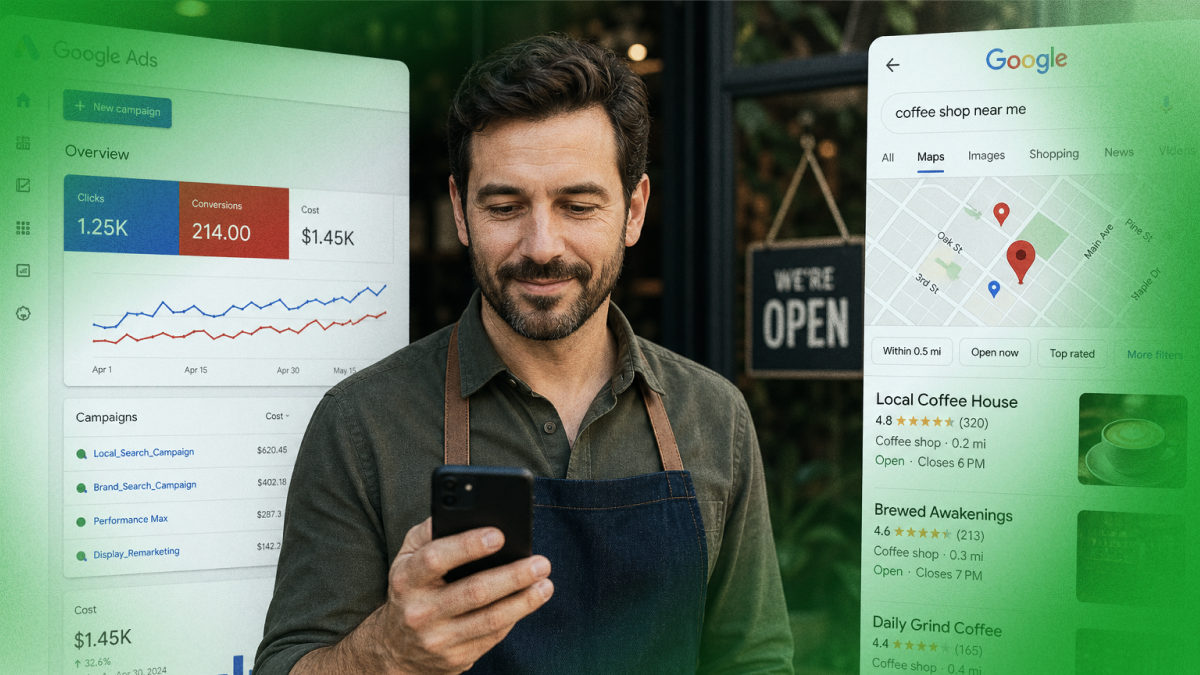
Type "dentist near me" or "plumber in [your town]" into Google and look at the top of the page. Below the ads, you get a small map with three businesses pinned and listed underneath, each with a star rating, a few words, and a call or directions button. That is the Map Pack, sometimes called the local three pack.
It exists because Google figured out that someone searching for a local service does not want ten blue links. They want a few nearby options they can call right now. So Google narrows it to three. Those three soak up the overwhelming share of clicks and calls for that search. Position four and beyond, the "more places" you have to tap to see, might as well be invisible to most people.
Getting in is everything. Staying out is expensive in a way you never see, because you never get the call that went to someone else.
How Google decides who gets the three spots
Google chooses the three on a mix of three things. Understanding them is what makes the rest of this article make sense.
Relevance is how well your business matches what the person searched. If they typed "emergency plumber" and your profile barely mentions emergency work, you are less relevant than the guy who spells it out.
Distance is how close you are to the searcher, or to the area they searched. Local search is physical. Someone two miles closer has a real edge for that specific search, and that edge shifts as the searcher moves.
Prominence is how known and trusted your business looks. Reviews, consistency across the web, how complete and active your presence is, how established you seem overall. This is the bucket you have the most control over and the one most businesses neglect.
Almost every reason you are missing from the pack traces back to one of those three. Now the specific causes.
Reason 1: Your primary category is wrong or too vague
This is the most common silent killer, and the easiest to overlook. Google leans heavily on your primary business category to decide which searches you are even eligible for. Pick the wrong one and you have quietly excluded yourself from the searches that matter.
A med spa listed only as "spa" will struggle to appear for "botox" searches. A shop that does mostly brake work but is categorized as a generic "auto repair shop" competes worse for "brake repair" than the place that named it directly. The category is the lane you are racing in. If it is the wrong lane, effort everywhere else barely helps.
The fix is to set the most accurate primary category for what you actually want to be found for, and add the relevant secondary categories on top. Match the words customers search, not the words you would use on a business card.
Reason 2: You are outside the search radius
Distance is brutal and it is mostly physical. If your business sits on the edge of town and the searcher is downtown, the businesses clustered near them have a built in advantage for that search. There is no trick that teleports your storefront.
This matters most for businesses competing in a big city or a spread out area. You might rank beautifully when someone searches from your street and vanish entirely when they search from across town. That is not a glitch. That is distance doing its job.
You cannot move your building, but you can widen the area where you show up by being strong on the other two factors. The more relevant and prominent you are, the further out Google is willing to show you, because it trusts that you are worth the extra distance. Distance sets the difficulty. Prominence is how you beat it.
Reason 3: Not enough reviews, or the ones you have are stale
Reviews are one of the loudest prominence signals there is, and they pull double weight because they sway both Google and the human deciding who to call. If the businesses in the pack have 120 reviews and you have 11, you are starting the race a lap behind.
It is not only the count. Freshness matters just as much. A steady trickle of recent reviews tells Google you are active and customers keep choosing you. A big pile of reviews where the newest is from two years ago sends the opposite message, that something stalled. A competitor with fewer reviews but a fresh, steady flow can outrank a business sitting on an old hoard.
The fix is to make review collection a constant, not a campaign. Ask every satisfied customer, right after the good experience, with a path so short it takes them ten seconds. Then keep doing it forever, not for one enthusiastic month.
Reason 4: Your business information is inconsistent across the web
Your name, address, and phone number appear in a lot of places online, your Google profile, old directory listings, your website, social pages, things you forgot you ever created. When those copies disagree, Google trusts you less.
It sounds minor. It is not. If one listing says "Street" and another says "St," if an old profile has a disconnected phone number, if a directory still shows the address from two moves ago, Google sees a fuzzy, uncertain picture of who and where you are. Uncertainty is the enemy of ranking. Google would rather show a business it is sure about.
The fix is to hunt down those mismatched listings and make every copy identical, down to the punctuation. Tedious, yes. It is also one of the highest return cleanups in local search, because consistency is something most of your competitors never bother to fix.
Reason 5: Your profile is thin or half finished
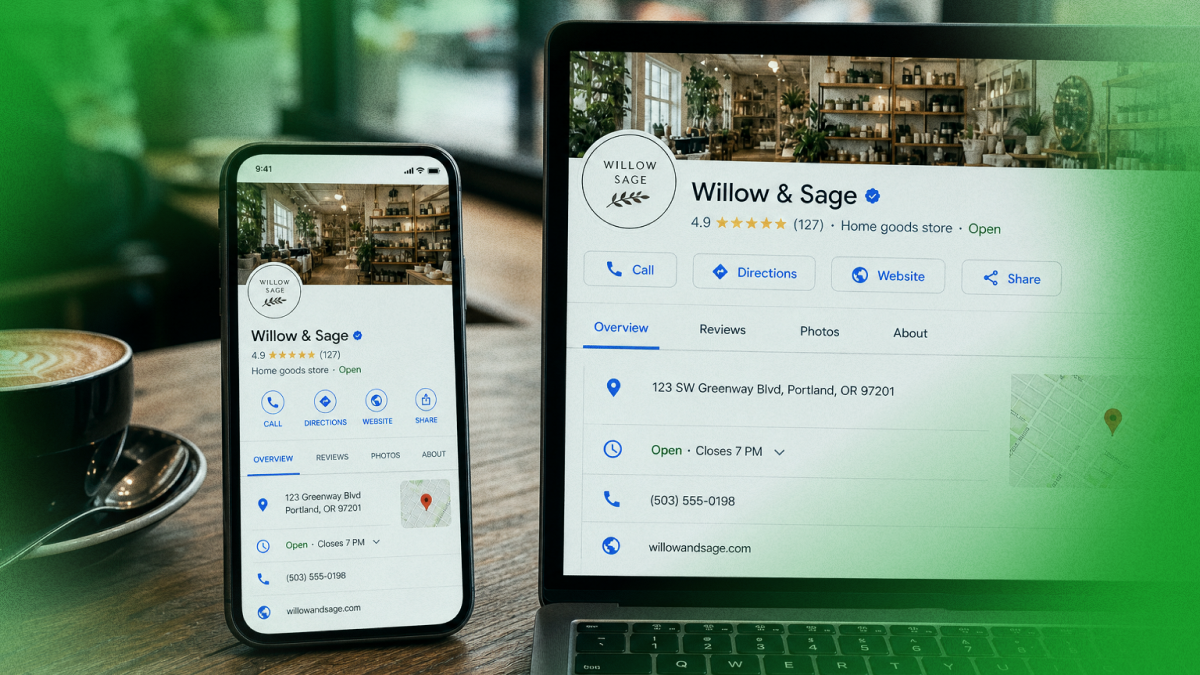
Google rewards complete, active profiles and quietly demotes the empty ones. A lot of businesses claim their listing, fill in the name and address, and walk away. That half built profile competes against businesses that filled in everything.
Missing hours, no photos, an empty description, no services listed, no categories beyond the bare minimum. Each gap is a small reason for Google to favor the more complete competitor, and a small reason for a human to skip you for the listing that actually shows them what they need.
The fix is to fill in all of it. Accurate hours, real photos, a clear description with the words people search, your full list of services, every category that genuinely applies. A complete profile is the floor, not the ceiling, and a surprising number of businesses never even reach the floor.
Reason 6: You are new, or your overall trust is just low
Prominence builds over time, and a young business has not had the time yet. If you opened recently, you are competing against businesses that have been accumulating reviews, mentions, and consistent signals for years. That gap is real and it is not a sign you are doing anything wrong.
The same goes for a business that has technically existed for a while but never did anything to build local trust. No steady reviews, no consistent listings, no activity. From Google's side, established age without signals does not count for much.
The fix is patience plus the right work, in that order. You will not leap into a competitive pack in two weeks. But consistent reviews, clean listings, and a complete, active profile compound month over month, and the gap closes faster than most owners expect once the signals start stacking.
Reason 7: The businesses in the pack are simply doing more
Sometimes nothing is broken on your end. You are just being outworked. The three in the pack have more reviews, fresher ones, more complete profiles, cleaner listings, and more local signals than you do. They earned the spot, and the spot is finite. Only three fit.
That is not a reason to give up. It is a map. Look at who holds the pack for your main searches and study the gap. Almost always it comes down to reviews and consistency, the two things within your control. Close that gap and the pack is not a fortress. It is a leaderboard, and leaderboards change.
So what do you actually do about it
Stripped down, getting into the pack is a short list done consistently. Set the right primary category so you are eligible for the searches that matter. Make your business information identical everywhere it appears. Fill your profile in completely and keep it active. Collect fresh reviews steadily and never stop. Then watch the businesses above you and close the gap where you are behind.
None of it is complicated. The hard part is doing all of it, consistently, while running an actual business. That is exactly where most local SEO efforts fall apart, in the keeping up rather than the knowing what to do.
That is the gap Leapfy is built to close. It handles the consistency cleanup, keeps fresh reviews coming, tracks the competitors sitting above you in the pack, and works from the outside without ever needing access to your Google Business Profile, so you stay in full control of your own account. Every two weeks you get a plain language report showing where you rank, who you are gaining on, and what moved. Instead of guessing why you are stuck below the pack, you can see the reasons and watch them shrink.
Once you see the gap between where you are and where your competitors are ranking, the decision about whether to invest in local SEO becomes obvious. And you have the specific data to evaluate whether any platform, including Leapfy, addresses the problem you actually have.