Local SEO vs Google Ads: Which Is Worth More for a Local Business?
In this article
If you stop paying for Google Ads today, your leads stop today. If you stop investing in local SEO today, the leads keep coming for months. That single sentence is the whole debate, and most business owners only learn it after they have spent thousands finding out.
This is not a case of one being good and the other being bad. Both put your business in front of people searching on Google. They just work in completely different ways, cost money in completely different shapes, and reward you on completely different timelines. The question is not which one is better in the abstract. It is which one is worth more for a local business with a real budget and a real need for the phone to ring.
Here is the honest comparison.
The core difference: rent versus ownership
Google Ads is rent. You pay to occupy a spot at the top of the results, and you keep that spot for exactly as long as the money flows. The day the budget runs dry, your listing vanishes and someone else moves into your slot. You never build anything you keep. You rent attention by the click, forever.
Local SEO is closer to ownership. You put in work and time to earn a position in the map results and the organic listings, and once you have it, it keeps producing without a meter running on every visit. The customer who finds you in the map pack on Tuesday costs you nothing more when the next one finds you on Wednesday. You built an asset instead of renting one.
That is the lens for everything below. One is a tap you pay to keep open. The other is a well you dig once and keep drawing from.
How Google Ads actually works for a local business
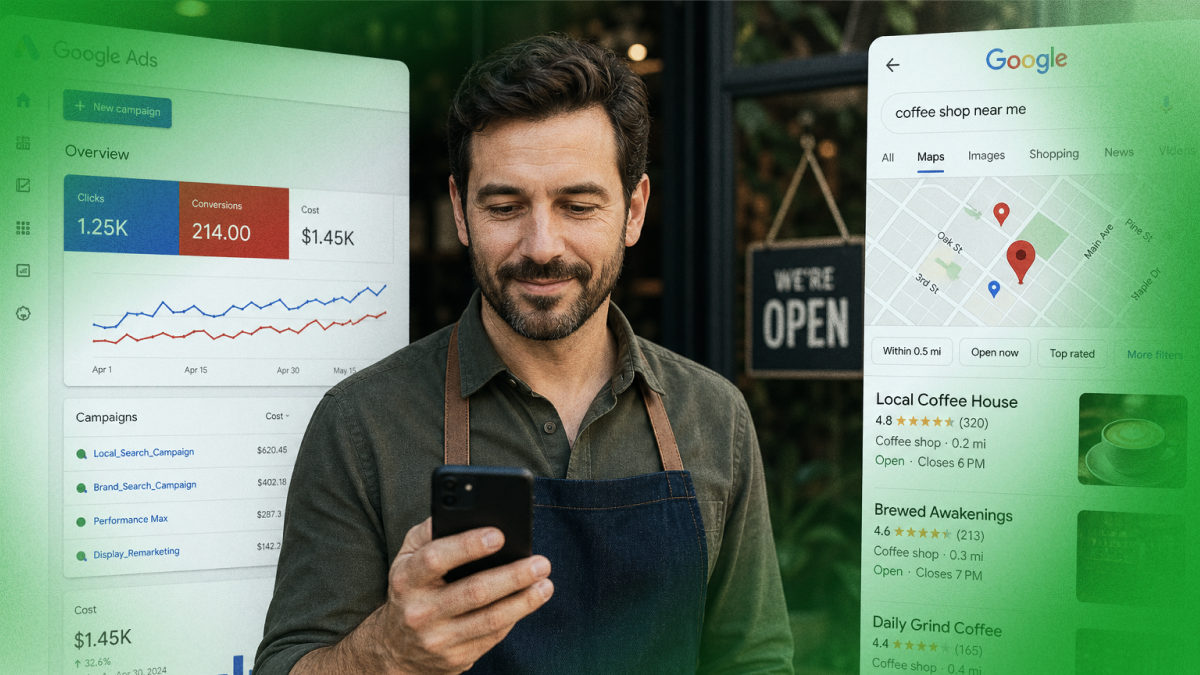
Google Ads runs on an auction. You bid to show up for a search term, and you pay every time someone clicks. The price per click depends on how many other businesses want that same term. In a calm category it might be a couple of dollars. In something like legal services or home repair, a single click can run twenty, forty, or more, and a click is not a customer. It is a maybe.
So the real number that matters is not cost per click. It is cost per customer. If clicks cost you eight dollars and one in ten clickers becomes a paying customer, you are paying eighty dollars to land that customer before you have done a thing. In competitive categories the math gets heavier fast.
Ads have one genuine strength worth respecting. Speed. You can switch them on this afternoon and have clicks by tonight. For a brand new business with zero presence, or a time sensitive push like a grand opening or a seasonal rush, that instant visibility is real and useful.
The catch is that the speed never converts into permanence. Month twelve of running ads costs you just as much as month one. You are not climbing toward anything. You are paying the same toll over and over to stay in the same spot.
How local SEO works, and why the clicks are worth more
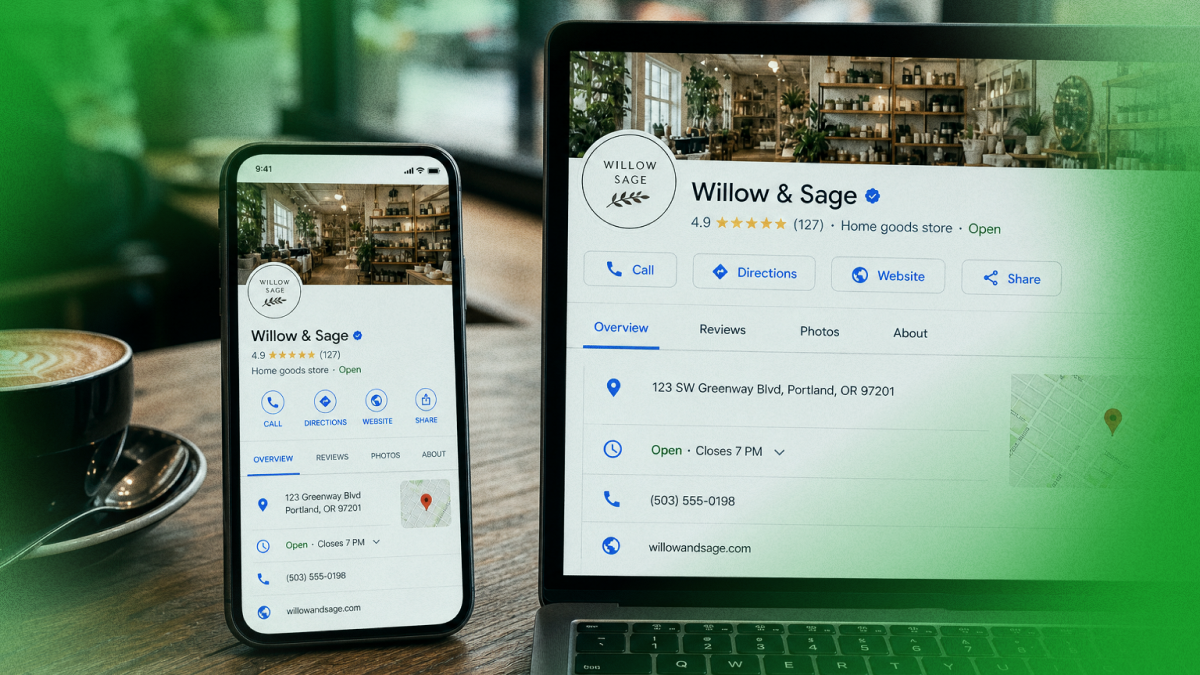
Local SEO earns you placement in two spots that paid ads cannot fully buy your way into: the map pack, those top three businesses shown on the little map, and the organic listings below the ads. People notice the difference between an ad and an earned result, and a lot of them skip straight past the ads to the businesses Google actually ranks. An earned spot carries a trust that a paid label never quite does.
The work behind it is steady, not flashy. Consistent business information across the web. A steady flow of fresh reviews. Signals that tell Google you are a real, active, trusted local business. None of it happens overnight, and that is the trade. You give up the instant on switch of ads in exchange for a position that does not switch off when you stop paying.
The leads that come from that position have two advantages. They cost nothing per click once you rank, and they often convert better, because a customer who chose you from the organic results feels like they discovered you rather than getting sold to.
The honest math
Picture two businesses in the same town with the same monthly budget to spend on getting found.
Business A pours it all into Google Ads. Every month the leads come in, and every month the budget resets to zero. Stop paying in month six and the leads stop in month six. There is nothing left behind. The spend bought traffic, not an asset.
Business B puts that same money into local SEO. The first month or two looks quiet while the groundwork settles. By month two or three the rankings start climbing, and the leads begin arriving without a per click charge attached. By month six, Business B is getting found around the clock and still owns that position even on a month they spend less. The early patience turned into something that keeps paying.
This is the pattern behind the results local businesses see when they commit to organic. A dentist watching bookings climb 60 percent over two months. A lawyer seeing leads from Google more than triple. A gym counting 45 percent more walk ins. None of that resets to zero when a campaign budget runs out, because none of it was rented.
When Google Ads is actually the right call
To keep this fair, there are real situations where ads earn their cost.
You just opened and have no online presence yet, so you need visibility today while the slower organic work builds underneath. You are running a short, time sensitive promotion where speed matters more than the cost per lead. You operate in a category so seasonal that you only need to show up hard for a few weeks a year. Or you have money to test a brand new offer fast and want clicks immediately to see if it lands.
In those cases, ads do something organic cannot, which is appear instantly. Used that way, as a sprint or a bridge, they make sense.
What rarely makes sense is using ads as your only long term plan, paying the same toll year after year with nothing accumulating, while competitors quietly build organic positions that will outlast every campaign you run.
When local SEO wins, which is most of the time
For a settled local business that plans to be around next year and the year after, local SEO wins on the metric that matters most, which is what each customer actually costs you over time.
Ads have a flat cost that never improves. The hundredth customer costs the same as the first. Local SEO gets cheaper per customer the longer it works, because the position keeps producing on spend that does not climb with volume. Over a year, the gap between renting attention and owning it gets wide enough to fund a lot of other things in the business.
There is also the trust factor. People have learned to scroll past the ad label. An earned spot in the map pack reads as a recommendation from Google itself, and that perception turns more lookers into callers.
It is not really either or, it is where the long money goes
The smartest answer for many businesses is not to ban one and crown the other. Run ads when you genuinely need instant visibility, a launch, a promotion, a slow stretch you want to fill right now. But your long term budget, the money meant to build something, belongs in the channel that keeps producing after you stop feeding it.
Treat ads as the sprint and local SEO as the foundation. The mistake is doing it backwards, leaning on ads as the foundation and treating organic as a someday project, because that is the version where you are still paying full price for every single customer three years from now.
Why owners get stuck on ads anyway
If organic is the better long term play, why do so many local businesses stay glued to ads? Usually because SEO feels slow, opaque, and hard to verify. With ads you see the spend and the clicks in real time. With SEO you often hand money to an agency, wait three months, and get a vague report you cannot read.
That is the gap a tool like Leapfy is built to close. It does the organic work from the outside, without ever needing access to your Google Business Profile, and it sends a progress report every two weeks in plain language so you can see exactly what moved and where you stand against your competitors. You get the visibility ads gave you, on the channel that actually builds something. There is a 14 day free trial with no credit card, so you can see the picture before committing a cent.
Quick side by side
| Google Ads | Local SEO | |
|---|---|---|
| How you pay | Per click, every time | Steady investment in a position |
| Speed | Instant | Builds over 30 to 90 days |
| When you stop paying | Leads stop immediately | Position keeps producing |
| Cost per customer over time | Stays flat | Drops as it compounds |
| What you build | Nothing you keep | An asset you own |
| Best used for | Launches, promos, sprints | The long term foundation |
So which is worth more?
For a quick burst of visibility, Google Ads. For the long game, the channel that keeps sending you customers after the spending slows, local SEO wins, and it is not particularly close once you account for cost per customer over time.
Once you see the gap between where you are and where your competitors are ranking, the decision about whether to invest in local SEO becomes obvious. And you have the specific data to evaluate whether any platform, including Leapfy, addresses the problem you actually have.