NAP Consistency: How Mismatched Business Info Is Quietly Sinking Your Google Ranking
In this article
There is a ranking problem that almost no business owner ever checks, costs nothing to cause, and quietly holds you back for years. Your name, address, and phone number are scattered across dozens of places online, and they do not all match. Google notices, and it trusts you a little less for it.
This is one of the least glamorous topics in local search and one of the highest return things you can fix. No clever content, no expensive ads, just making sure the basic facts about your business say the same thing everywhere. Here is why it matters more than it sounds, where the mismatches come from, and how to clean them up.
What NAP actually means
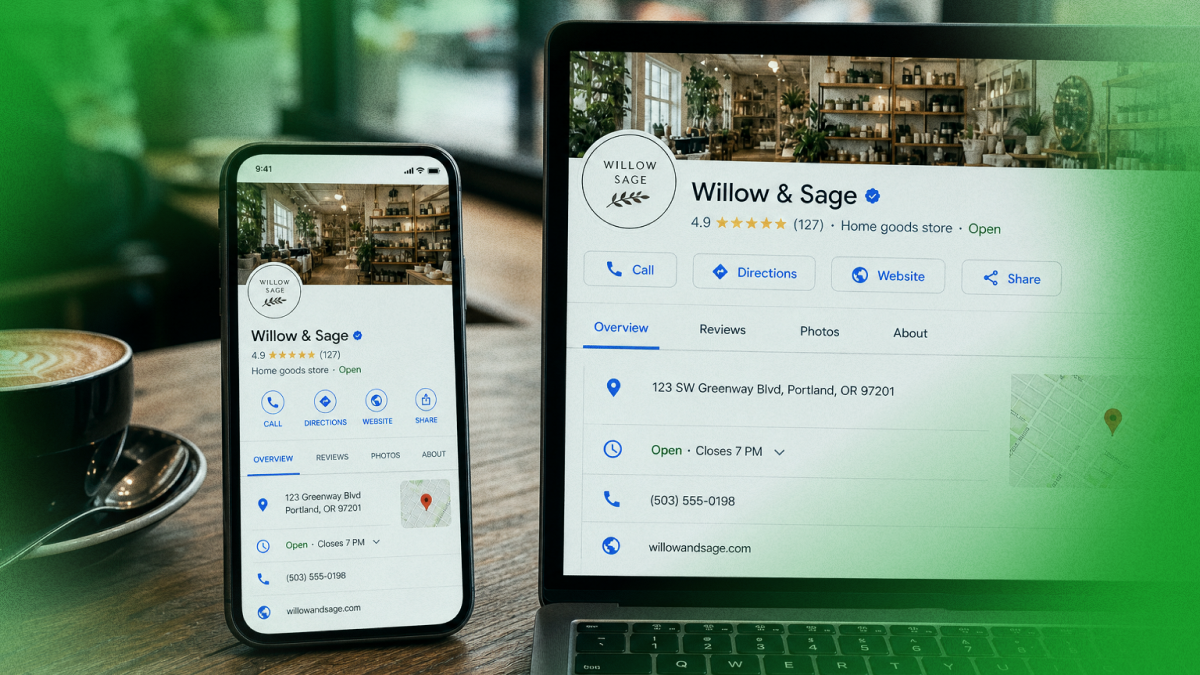
NAP stands for Name, Address, and Phone number. It is the core identity of your business as it appears online, and it shows up in a lot more places than you think. Your Google Business Profile. Your website. Yelp, Facebook, and industry directories. Old listings from a web designer you used in 2019. Data aggregators you have never heard of that quietly feed business information to other sites.
Every one of those is a copy of your identity. NAP consistency simply means all those copies say exactly the same thing. The same name, the same address written the same way, the same phone number. When they agree, Google sees one clear, trustworthy business. When they disagree, Google sees a blur.
Why Google cares so much about it
Local ranking runs on trust, and trust runs on certainty. When Google decides which businesses to show for a local search, it wants to be sure the business it is recommending is real, findable, and exactly where it says it is. Consistent information across the web is one of the strongest ways it confirms that.
Think about it from Google's side. If five different sources all agree that your business is at the same address with the same phone number, Google is confident. It will happily put you in front of searchers. If those five sources disagree, with two addresses and three phone numbers between them, Google has a problem. Which one is right? Is this even one business or several? Did they move? When Google is unsure, it plays it safe and favors a competitor it is certain about.
Uncertainty is the enemy of ranking. Mismatched NAP manufactures uncertainty out of nothing.
Where the inconsistencies come from
Almost no one creates these mismatches on purpose. They pile up on their own over the life of a business.
You moved offices and updated your website but never touched the twenty directories that still list the old address. You changed phone systems and the new number went on your Google profile but not on the listing an old marketing agency set up. A directory auto generated a listing for you with slightly wrong details, and you never knew it existed. You rebranded from "Smith and Sons Plumbing" to "Smith Plumbing Co" and half the web still uses the old name. Someone typed "Suite 200" on one site and left it off another.
None of these feel like a big deal in the moment. Each one is a small crack. Stack up enough small cracks across dozens of listings and you have a business that looks fuzzy and uncertain to Google, even though you have done nothing wrong.
The small mismatches that still count
Here is what surprises people. The differences that hurt you are often tiny, the kind a human would never think twice about.
"123 Main Street" on one listing and "123 Main St" on another. A suite number present in some places and missing in others. A phone number written with dashes here and with parentheses there, or worse, a different tracking number on one site than your real line. "Co" versus "Company" in your name. An old logo of a name you no longer use. To you these are obviously the same business. To an algorithm matching strings of text, they can read as different, and that difference chips at the certainty Google needs to rank you.
This does not mean every comma will sink you. It means the cleaner and more identical your information is everywhere, the easier you make it for Google to trust and rank you. Consistency is a signal you control completely, which is rare in local SEO.
How much it actually hurts
NAP inconsistency rarely shows up as a dramatic drop. That is exactly what makes it dangerous. It works as a quiet drag, a thumb on the scale against you in every local search, while you have no idea it is happening.
You see the symptoms without the cause. You rank just below the businesses you should be beating. You appear for searches near your door but vanish a little further out. A competitor with a worse service but cleaner listings sits above you and you cannot work out why. Often the answer is that Google is simply more sure about them than about you, and that certainty came from boring consistency you never bothered with.
The good news in that is the flip side. Because most of your competitors never clean this up either, fixing it is a real edge, and a cheap one.
How to find your inconsistencies
Before you fix anything, you have to see the mess, and most of it is hidden. A few ways to surface it.
Search your exact business name in Google and see every listing that comes back, then check each one for the right details. Search your phone number on its own, which often digs up old listings tied to a number you forgot. Look yourself up on the big directories your industry uses and read the fine print on each. Pay attention to the data aggregators, the behind the scenes companies that supply business information to many other sites at once, because a wrong detail there spreads everywhere downstream.
It is tedious work, and that is the honest catch. The information is spread across more places than you would guess, and finding all of it by hand takes patience. But you cannot correct what you have not found, so the audit comes first.
How to fix it
Once you have the list, the fix is conceptually simple. Decide on one exact version of your name, address, and phone number, down to the punctuation and the suite number, and then make every single listing match it.
Pick your canonical format. Write the address exactly one way and never deviate. Use one consistent phone number, ideally your real main line rather than a tracking number that differs from listing to listing. Then go through each place your business appears and correct it to that single version. Fix the data aggregators too, because if you only clean the listings you can see and leave the upstream source wrong, the bad data quietly repopulates later.
Done properly, you end up with one clear, identical identity everywhere Google looks. That is the whole goal.
What about businesses without a public storefront
A common question comes from plumbers, electricians, cleaners, and other businesses that go to the customer rather than the other way around. If you do not show a public address, does NAP consistency still matter? Yes, and arguably more.
Service area businesses often hide their address on Google, which is allowed, but the name and phone number still need to be identical everywhere they appear, and the service area itself needs to be consistent. The same drift problems apply. Old listings with a former phone number, a name written three ways, a stale address from before you went mobile. If anything, these businesses tend to have messier trails, because they have often changed setups more than a fixed location shop. The fix is the same. One name, one number, one consistent story across the web.
A quick before and after
Picture a dental clinic that moved across town two years ago. The Google profile is correct. The website is correct. But Yelp still shows the old address, an industry directory lists a disconnected phone number from the previous office, and a data aggregator quietly feeds the old address to a handful of smaller sites. To the owner, everything looks fine, because the two places they actually check are right.
To Google, this clinic has two addresses and two phone numbers floating around, and no clear answer about which is real. So it hedges, and a competitor with one clean, consistent identity takes the spot in the pack. Clean up those three stray sources and the upstream aggregator, and the clinic stops looking like two half businesses and starts looking like one solid one. Nothing about the clinic changed. Only Google's certainty did, and that was enough to move the ranking.
The part nobody warns you about: it is never finished
Here is the catch that makes NAP a genuine headache rather than a one afternoon task. You clean it all up, and then it drifts again. New directories generate listings with old data pulled from somewhere. An aggregator reverts to a stale record. A site you have never heard of scrapes outdated information and republishes it. Six months later the cracks are reopening.
Consistency is not a project you finish. It is a state you maintain. That is why so many businesses do a big cleanup once, feel good about it, and then slowly slide back into the same fuzzy mess, losing the ranking edge they briefly earned. The work that actually pays off is the work that keeps happening.
Where Leapfy fits
Finding every listing, correcting each one to a single format, fixing the upstream aggregators, and then watching for drift month after month is exactly the kind of steady, unglamorous work that busy owners never get around to. It is important and it is boring, which is the worst combination for something you are supposed to do yourself.
Leapfy handles this from the outside, without ever needing access to your Google Business Profile. It works on the signals around your business across the web, keeps your information consistent, and stays on it over time instead of leaving you with a one off cleanup that quietly unravels. Every two weeks you get a plain language report on where things stand and what moved, so the boring work that protects your ranking is getting done whether or not you remember it exists.
You keep running your business. The quiet consistency that keeps Google sure about you gets handled.
Once you see the gap between where you are and where your competitors are ranking, the decision about whether to invest in local SEO becomes obvious. And you have the specific data to evaluate whether any platform, including Leapfy, addresses the problem you actually have.