Local SEO White Label: The Complete Guide for Agencies Ready to Scale

In this article
At some point, almost every digital agency that serves local businesses hits the same wall. You have more clients who need local SEO than you have the internal capacity to deliver it well. You could hire, but local SEO work is time-intensive and hard to systematize without the right tools. You could raise prices and take fewer clients, but that's not always the growth direction you want.
White label local SEO is the third option: partnering with a platform or provider that delivers the work under your agency's brand, so your clients see your brand and you keep the relationship, while the delivery is handled by someone who has built the infrastructure to do it at scale.
This guide covers what white label local SEO actually includes, what to look for in a provider or platform, how to price it for your clients, and the questions you should ask before committing to any arrangement.
What White Label Local SEO Actually Includes
The term "white label local SEO" covers a range of arrangements, and it's worth being specific about what you're evaluating.
White label software or platform: You access a local SEO platform rank tracking, GBP monitoring, citation management, reporting and present it to clients under your agency's branding. You do the strategy and client communication. The platform provides the data and tools. This is the most common arrangement for agencies that want to maintain control of delivery.
White label managed service: A third-party provider handles the actual optimization work GBP optimization, citation building, review management, local content and delivers reports under your brand. You're the account manager; they're the delivery team.
Hybrid: You use white label software for visibility and reporting, and a white label service provider for specific execution tasks you don't want to handle internally.
Understanding which arrangement you need depends on what your bottleneck actually is. If the problem is client reporting and visibility, software is probably enough. If the problem is execution capacity, a managed service makes more sense.
Why Agencies Choose White Label Local SEO
The business case is straightforward. Local SEO for a single business requires a specific set of recurring tasks: monitoring and updating the GBP, building and maintaining citations, managing review acquisition, tracking map pack rankings, producing monthly reports. Doing this manually for one client is manageable. Doing it for twenty or fifty clients is a different operational challenge.
White label platforms allow an agency to serve significantly more clients per team member than manual approaches allow. The economics improve as you scale. The client experience improves because reporting is more consistent and data is more accessible. And the agency owner's time is freed from delivery operations and redirected toward sales, strategy, and relationships.
The downside is dependency. You're building your service delivery on someone else's platform or infrastructure. That's a risk worth managing through contract terms, data portability, and making sure you're not locked into arrangements you can't exit.
What to Look for in a White Label Local SEO Platform
If you're evaluating platforms for white label local SEO, here are the capabilities that matter.
Grid-based rank tracking: The most valuable kind of rank tracking for local SEO is the map grid showing where your client ranks across different points in their service area, not just a single ranking from an arbitrary location. A business that ranks #1 in the city center but drops to #6 in the suburbs has a very different problem than one that ranks consistently across the grid. Leapfy's map grid tracking shows this at the local level, so you can see exactly where your client is winning and where they're losing to competitors.
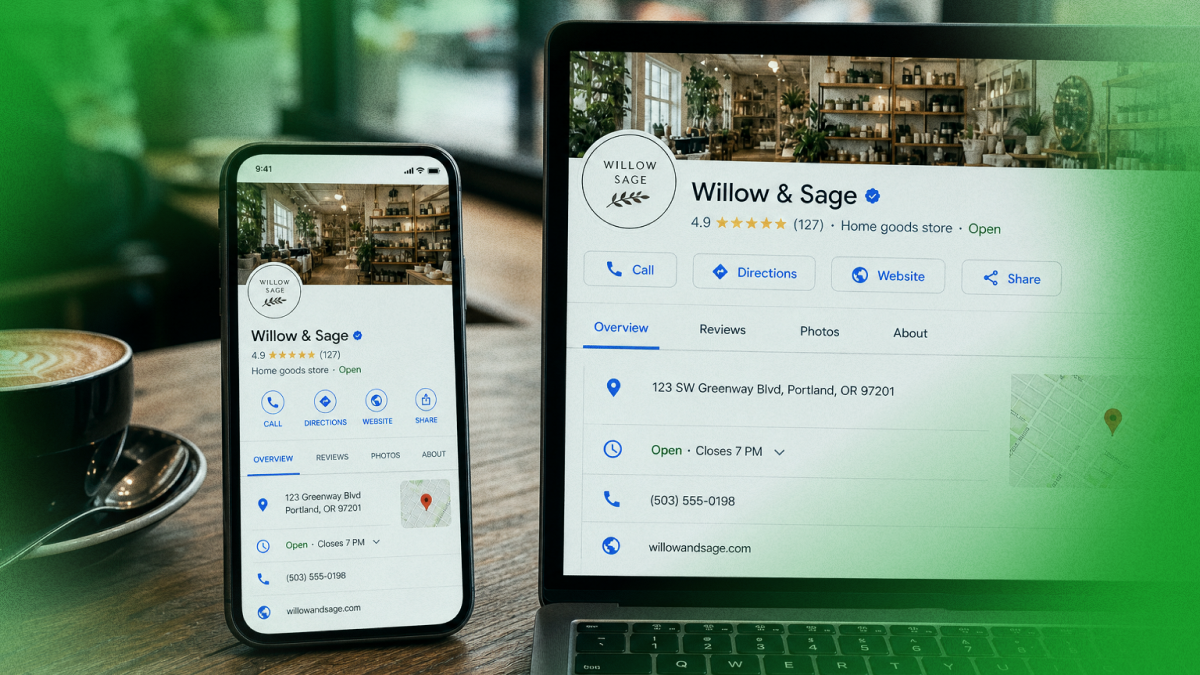
GBP monitoring: Your client's Google Business Profile can change in ways you don't control Google can suggest edits, add attributes, or change category assignments. A good platform monitors these changes and alerts you when something happens that needs attention.
Citation tracking: Building citations matters less than it used to, but maintaining citation consistency still matters. A platform that shows you where your client is listed and flags inconsistencies in NAP data saves significant manual auditing time.
White label reporting: Reports should go out with your agency's branding, not the platform's. This sounds obvious but some platforms make it harder than it should be. Look for customizable report templates that include your logo, color scheme, and contact information.
Client-facing dashboards: Some clients want access to their own data without going through you for every question. A client portal under your agency's branding lets clients see their rankings and performance without requiring your team to produce a custom report every time someone asks.
How to Price White Label Local SEO for Your Clients
Pricing local SEO services is always context-dependent, but here's a framework that works for most agency situations.
Understand your cost: What does the white label platform or service actually cost you per client per month? This is your floor. Everything above it is margin.
Understand what your market will bear: Local businesses vary enormously in what they're willing to pay for local SEO. A single-location restaurant has a different budget than a multi-location dental practice. Tier your service offerings accordingly.
Price for value, not cost: The value of ranking in the Google Maps top three for a competitive local keyword is often orders of magnitude higher than the cost of the service. A plumber who adds ten new customers per month from improved local rankings at an average job value of $300 is generating $3,000 per month in new revenue. Pricing your service at $300 per month for that outcome is cheap for the client and profitable for you.
Build in room for account management: White label platforms handle the technical work, but you still spend time on client communication, strategy, and relationship management. That time has cost. Make sure your pricing accounts for it.
A reasonable starting point for most agencies: cost of platform or service, times three to five. This leaves margin for account management time and profit while remaining competitive in most local markets.
Questions to Ask Before Committing to a White Label Arrangement
Before signing up with any white label platform or service provider, get clear answers to these questions.
Can you export your client data if you decide to leave? Lock-in is a real risk. If a platform holds your client data hostage, switching becomes very expensive.
What happens to your clients' rankings if the platform has an outage? Service reliability matters, especially for clients who are paying for ongoing ranking improvement.
How accurate is the rank tracking? Not all local rank tracking tools are equally accurate. Ask for methodology and compare results against Google Maps manually for a few searches before committing.
What does onboarding look like? Setting up twenty clients on a new platform takes time. Understand what support the provider offers during the transition.
Is the white label branding complete? Check whether the platform's name or brand appears anywhere in client-facing reports, emails, or dashboards. Some platforms say "white label" but still include their branding in subtle ways.
FAQ
Is white label local SEO ethical?
Yes. Agencies have always used specialist partners and tools to deliver services the same way a construction company subcontracts specialized trades. White labeling is a standard business practice. The key is delivering the results you promise to clients, regardless of how the delivery is structured.
How many clients do you need to make white label local SEO worthwhile?
The economics typically start to make sense around five to ten clients. Below that, the overhead of setting up and managing a white label arrangement may exceed the savings. Above that, the efficiency gains compound quickly.
Can I white label Leapfy for my agency?
Yes. Leapfy offers agency plans with white label reporting and multi-client dashboard management. You can run your clients' local SEO visibility under your agency's brand.
What's the difference between white label local SEO and reselling?
In reselling, you're typically passing the provider's product directly to the client with minimal customization. In white labeling, the product or service is presented as your own. White labeling gives you more control over the client relationship and more flexibility in how you package and price the service.
How do I explain white label arrangements to clients who ask?
Most clients don't ask, and don't need to know. If they do ask, the honest answer is that you use specialized tools and partners to deliver services, the same way any professional service firm uses software and specialist expertise. The focus should be on the results you're delivering, not the mechanics of how you deliver them.
White label local SEO is one of the clearest paths to scaling an agency's local SEO practice without proportionally scaling headcount. The key is choosing the right platform one with the data accuracy, reporting quality, and client-facing features that let you deliver a premium service experience under your own brand.
See how Leapfy's agency tools support white label local SEO at scale