How to Get More Members with Google Maps for Gyms and Fitness Studios
In this article
January 2nd. Someone in your neighborhood made a resolution. They want to get fit, they're motivated (maybe more motivated than they'll be in February, but let's stay positive), and they grab their phone to find a gym nearby.
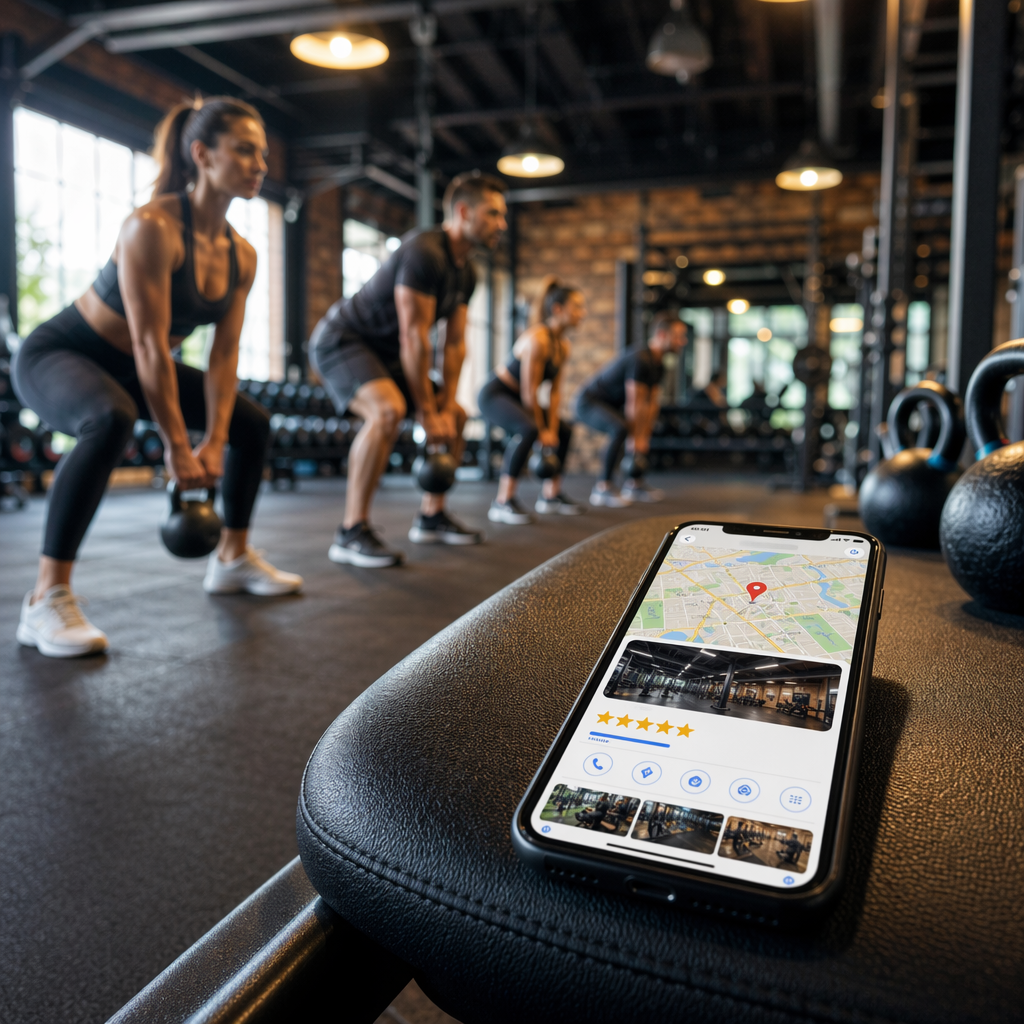
Google Maps pops up. A handful of gyms and studios appear. They look at the photos, the reviews, the class descriptions. They pick one and sign up.
Is it yours?
Or what about the person who just moved into a new apartment two miles away and is looking for a yoga studio or HIIT class? Or the dad who wants to find a gym that has family-friendly hours? Or the person who just got cleared to exercise after an injury and needs something specific?
Every week, people in your neighborhood are making these decisions, and they're making them on Google Maps. If your gym or fitness studio isn't showing up well in those searches, you're missing out on members who are ready to join. They just can't find you.
This guide walks through every step to make sure you're visible, compelling, and competitive on Google Maps, so more of those searches turn into memberships.
The New Member Acquisition Reality
For most gyms and fitness studios, new members come from a mix of: referrals from existing members, walk-ins who notice the location, social media, and search. Of these, search is the one that's growing fastest, and it's often the most underutilized.
Here's why it matters so much: people searching "gym near me" or "yoga studio [city]" are actively looking to join something. They're not passively scrolling past your Instagram post, they're on Google with intent. They want to find a gym. They just need to find yours.
Estimates suggest that local search results drive foot traffic for more than 70% of consumers who search for local services (based on typical local consumer behavior patterns). For fitness businesses, where the physical experience is everything, getting someone through the door is the critical first step. Google Maps is what makes that first visit happen.
Optimizing Your Google Business Profile for a Fitness Business
Let's walk through your profile, piece by piece.
Category: This is where specificity helps you. "Gym" is broad. "Yoga Studio," "Pilates Studio," "Boxing Gym," "CrossFit Gym," "Martial Arts School," "Dance Studio," or "Personal Trainer" might be more accurate and help you show up in more specific searches. Pick the most accurate primary category, then add secondary categories that describe your full offering.
Services list: For a fitness business, this is your class schedule in profile form. List each type of class or program you offer: CrossFit, HIIT, spin cycling, hot yoga, strength training, personal training, group fitness, kids' classes, senior fitness, nutrition coaching, whatever you have. Add a description to each that explains what it involves and who it's for.
A potential member who sees exactly the type of class they've been looking for listed on your profile is far more likely to book a trial than one who just sees "gym" and has to dig through your website.
Attributes: Google lets you add attributes that describe your facility, things like "has free weights," "has a pool," "women-only," "24-hour access," "offers childcare," "wheelchair accessible," "has sauna." These attributes appear on your profile and also help you show up in searches that include those specific features.
Business description: Write this in a way that speaks directly to your potential member. What's the vibe of your studio? Are you a judgment-free zone for beginners? A high-performance environment for serious athletes? A community-focused studio where everyone knows your name? Your description should make someone feel like they already belong there before they walk through the door.
Photos and virtual tour: More on photos in a moment, but note that Google allows businesses to add a 360° virtual tour. For gyms and studios, this can be a powerful differentiator, letting potential members peek inside before they visit. If you have a well-equipped, attractive space, showing it off virtually is an excellent way to convert a profile view into a visit.
Showcase Your Community with Photos
People don't join a gym, they join a community. Your photos should reflect that.
What to photograph:
- Classes in action (with member permission), energy, community, real people
- Your equipment and facilities in their best light
- Trainers and instructors (smiling, approachable, professional)
- Before/after transformation stories (with consent)
- Studio events, charity workouts, community challenges, milestone celebrations
- New equipment additions
- Seasonal promotions displayed in the studio
The tone should feel energetic and welcoming, not intimidating. If your target audience is beginners who are nervous about stepping into a gym for the first time, show images that reflect that everyone belongs. If you're targeting serious athletes, show intensity and results.
Update your photos regularly. New class types, new equipment, new instructors, every update is a reason to add something fresh to your profile.
Reviews Are the Word of Mouth of the Digital World
When a potential member is deciding between two gyms with similar locations and prices, reviews are often the deciding factor. And the content of those reviews matters beyond just the star rating.
People read reviews to understand what the experience is like:
- "The instructors actually remember your name and push you in the best way"
- "Great energy in every class, never felt judged as a beginner"
- "Classes are always full but never overcrowded, they keep the size manageable"
- "Cleanest gym I've ever been to"
These specific, authentic details are what turn a reader into a visitor.
Building your review base:
The best moment to ask a member for a review is right after a positive milestone, their first month complete, a personal record, a compliment they give you in person. "That means so much to hear! Would you mind sharing that on our Google page? It really helps us reach more people in the community."
You can also ask via your member newsletter or app notification: "Love being part of [Studio Name]? Tell the neighborhood! Drop us a Google review."
For classes with limited capacity, fewer but highly personal reviews can be more impactful than large numbers of generic ones. Encourage members to be specific about what they love.
Local Fitness Trends and Seasonal Hooks
Fitness businesses have a built-in seasonal rhythm that you can leverage on Google Maps posts:
- New Year (January): Resolution season, post about trial memberships, beginner-friendly classes, new member deals
- Spring (March–April): "Get ready for summer", transformation challenges, outdoor classes
- Back to school (August–September): New routines, adult fitness classes, after-school programs for kids
- Holiday season (November–December): Gift cards, maintaining fitness through the holidays, community events
Google Business Profile posts tied to these seasonal moments show up on your listing and demonstrate that your studio is active, engaged, and worth checking out right now.
Beyond seasonal content, post about:
- New class additions or schedule changes
- Instructor spotlights
- Member success stories (with permission)
- Community challenges or events
- New equipment or studio upgrades
Aim for two to three posts per week. Each one is a small signal to Google that your business is alive and well, and a small reason for a potential member to choose you over a competitor with a static profile.
Local Partnerships: Boost Your Visibility in the Community
One powerful strategy for fitness studios is building relationships with complementary local businesses. A yoga studio that partners with a local health food café, a CrossFit gym that connects with a sports physiotherapy clinic, or a martial arts school that works with local schools, these relationships can generate mentions, links, and referrals that build your local credibility both online and offline.
Getting mentioned on a local community website, health blogger's post, or neighborhood newsletter does more for your Google Maps visibility than many people realize. Google looks at your web presence as a whole, not just your profile in isolation.
The "Near Me" Advantage: Appear When It Matters Most
When someone opens Google Maps and searches "gym near me" or "fitness classes near me," they're using their phone's location to find the closest relevant options. Your visibility in these searches depends on:
- How complete and optimized your profile is
- Your review count and rating
- How recently your profile was active
- How closely your categories and services match what they searched
Being physically close to the searcher helps, but it's not enough on its own. A gym half a mile away with a fully optimized profile, 200 reviews, and regular posting activity will consistently outrank a gym that's even closer but has a bare-bones profile and 10 reviews.
The location advantage you have as a neighborhood gym only materializes in Google Maps if you've done the work to show Google you're a real, active, trustworthy business.
How Leapfy Can Help Your Gym or Fitness Studio
Growing a fitness community is your passion. Spending hours managing Google profiles, chasing reviews, and posting updates probably isn't.
Leapfy is a Google Maps SEO tool built for local businesses like yours. It helps gyms and fitness studios stay visible, active, and competitive on Google, so you can spend your time on what matters: training people, building community, and growing your studio.
Try Leapfy free at leapfy.ai →
Frequently Asked Questions
Q: My gym is in a really competitive area with big chain gyms. Can I still rank well on Google Maps?
A: Yes, and here's the thing about chains: they often have generic, impersonal profiles with lower review ratings because their member experience is inconsistent. An independent studio with a genuine community, personal reviews, and an active profile can absolutely outrank chains in local search results. Your authenticity is a competitive advantage.
Q: Should I create a separate Google listing for each instructor or trainer at my studio?
A: No, keep everything on one listing for your studio. Individual trainers who work as independent contractors might have their own profiles, but for your studio's Google Maps presence, consolidate on one listing to build all your reviews and authority in one place.
Q: Does offering free trials help my Google Maps ranking?
A: Not directly, but free trials bring in new members, and happy members leave reviews. More reviews improve your ranking. So it's indirectly very helpful. Mention your free trial or intro offer prominently in your profile description and as a Google post.
Q: My studio is fully booked most of the time. Do I still need to worry about Google Maps?
A: Having a waitlist today doesn't mean you will tomorrow. Class schedules change, seasons change, and member retention is never 100%. A strong Google Maps presence means that when someone does drop off, you've already got potential members in the pipeline ready to fill that spot.
Q: How do I handle reviews from members who had a bad experience with a specific instructor?
A: Respond professionally and empathetically. Thank them for the feedback, acknowledge that their experience matters, and let them know you take it seriously. If appropriate, invite them to contact you directly. Never be defensive or dismissive, other potential members are watching how you handle it.
Ready to grow your gym or studio membership with Google Maps? Try Leapfy free →
Part of the "Google Maps for Local Businesses" series. Also read: Google Maps for Auto Repair Shops | How to Get Your Restaurant to the Top of Google Maps