Strategies for Tracking Your Business on Google Maps in 2026
In this article
Strategies for Tracking Your Business on Google Maps in 2026
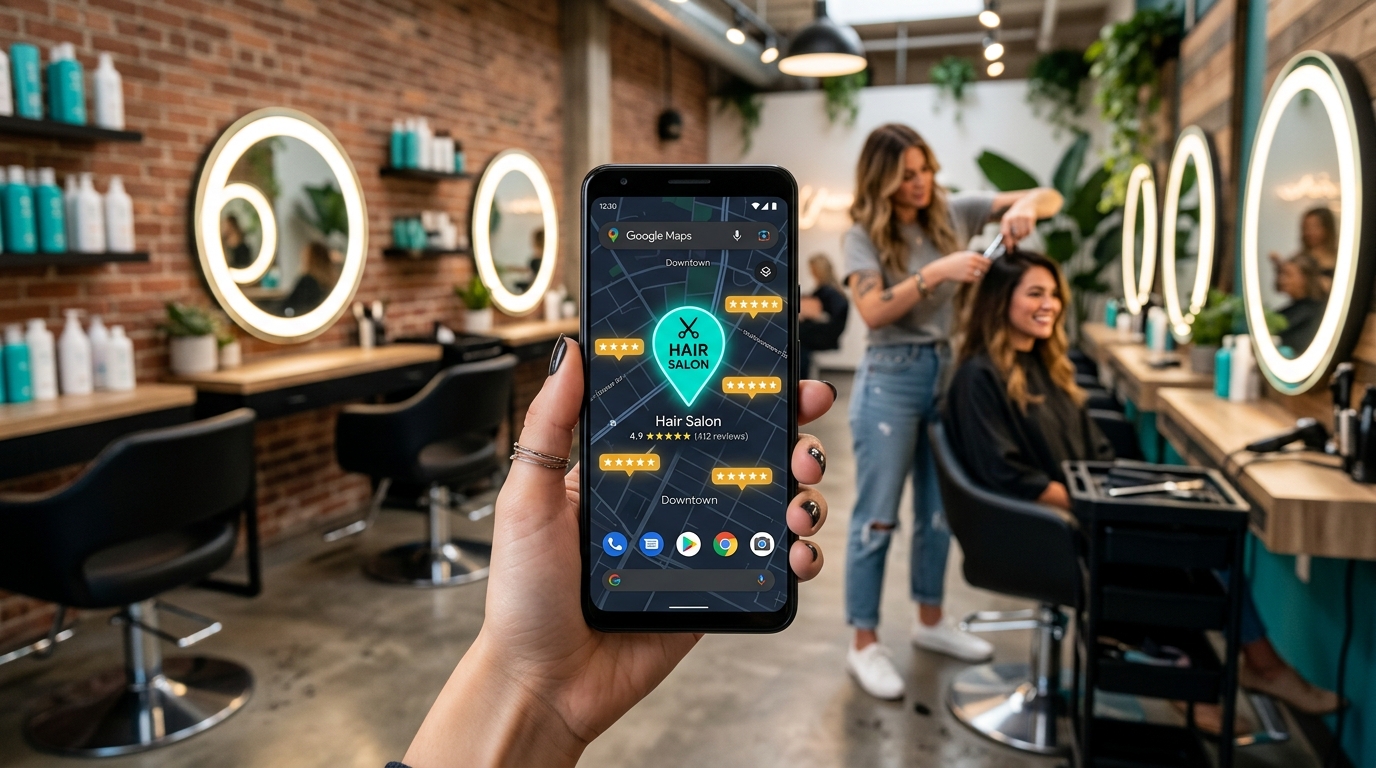
Effective local visibility starts with understanding how your company appears in geographic searches. Tracking Your Business on Google Maps is the process of monitoring your physical or service-area presence to ensure potential customers can find accurate information, such as your location, hours, and contact details. In 2026, search algorithms prioritize proximity, relevance, and data freshness, making consistent monitoring essential for maintaining a competitive edge in local markets.
To begin Tracking Your Business on Google Maps, you must verify that your profile is fully optimized with high-quality images and precise categorical data. This allows search engines to categorize your services correctly. When users search for solutions nearby, the system evaluates your profile's completeness. By regularly Tracking Your Business on Google Maps, you can identify if your location pin is accurately placed or if customer reviews require immediate responses to maintain your reputation.
Technical Methods for Local Monitoring
Monitoring your performance requires more than just looking at a map; it involves analyzing spatial data and search trends. Tracking Your Business on Google Maps involves using analytical tools to see which keywords trigger your profile's appearance. Businesses often use heatmaps to visualize where their ranking is strongest and where it fades as the distance from the physical office increases. This spatial awareness is a core component of Tracking Your Business on Google Maps effectively.
Data extraction and API integrations play a significant role in modern local SEO. By Tracking Your Business on Google Maps through automated systems, you can receive alerts when competitors move into your territory or when your ranking fluctuates. For companies looking to scale these efforts, Leapfy.ai provides AI-driven automation that streamlines customer interactions and data management, ensuring that the leads generated from your map presence are handled instantly and efficiently.
Optimizing Visibility Through Data Analysis
The relevance of your business in local searches depends on how well you manage your digital footprint. Tracking Your Business on Google Maps helps you understand the "Local Pack" dynamics—the top three results shown in a search. To stay in these top spots, you must analyze user behavior, such as how many people click for directions versus those who call directly from the map interface. Constant Tracking Your Business on Google Maps reveals these patterns, allowing for better budget allocation in local marketing.
| Metric to Track | Importance | Actionable Step |
|---|---|---|
| Search Queries | High | Identify which terms lead customers to your map profile. |
| Direction Requests | Medium | Determine the geographic reach of your physical location. |
| Website Clicks | High | Measure how many map users transition to your main site. |
| Call Volume | High | Evaluate the direct conversion rate from mobile map users. |
Consistent data hygiene is another pillar of Tracking Your Business on Google Maps. If your phone number or address changes and is not updated across the web, your ranking will suffer. Automated tools can assist in Tracking Your Business on Google Maps to ensure your Name, Address, and Phone number (NAP) remain consistent across all directories, preventing search engines from becoming confused by conflicting information.
Enhancing Customer Engagement and Conversion
Visibility is only the first step; the second is conversion. While Tracking Your Business on Google Maps, you should observe how users interact with your "Google Posts" and Q&A sections. These features allow you to communicate directly with prospects before they even visit your website. By Tracking Your Business on Google Maps interactions, you can tailor your messaging to answer the most common questions asked by local searchers in 2026.
Integrating advanced automation can significantly improve the results of Tracking Your Business on Google Maps. For instance, Leapfy.ai can automatically manage the influx of inquiries that stem from a highly-ranked map profile. Instead of manually responding to every chat or lead, the AI handles follow-ups and scheduling. This ensures that the effort spent Tracking Your Business on Google Maps translates directly into revenue by capturing every interested lead 24/7.
Future Trends in Geographic Search
As we move through 2026, augmented reality and voice search are changing how people navigate their surroundings. Tracking Your Business on Google Maps now includes optimizing for "near me" voice queries and ensuring your building's exterior is recognizable in street-view updates. Businesses that ignore Tracking Your Business on Google Maps risk becoming invisible to a generation of consumers who rely on AI assistants to filter their local options.
To stay ahead, consider these strategic steps:
- Audit your profile weekly to ensure all information is current.
- Respond to every review, as engagement is a key ranking signal.
- Use high-resolution 360-degree photos to enhance the user experience.
- Monitor competitor rankings in your specific neighborhood.
- Use Leapfy.ai to automate the lead capture process from your digital profiles.
By prioritizing Tracking Your Business on Google Maps, you create a reliable pipeline of local traffic. This proactive approach ensures that your business remains the preferred choice for customers in your immediate vicinity, leveraging both geographic proximity and digital authority.