Google Maps Ranking Factors in 2026: The Behavioral Signals Most Small Businesses Are Missing
In this article
Google Maps ranking factors in 2026 have shifted in a way that most small business owners don't know about yet — and it's costing them customers every single day.
For years, the advice was simple: claim your Google Business Profile, add your address, get some reviews, and you'll show up. That still matters. But the businesses dominating local search in 2026 are winning because of something different: behavioral signals.
Here's what's actually driving Google Maps rankings right now — and what you can do about it starting today.
What Behavioral Signals Mean (In Plain English)
Google watches what happens after someone finds your listing.
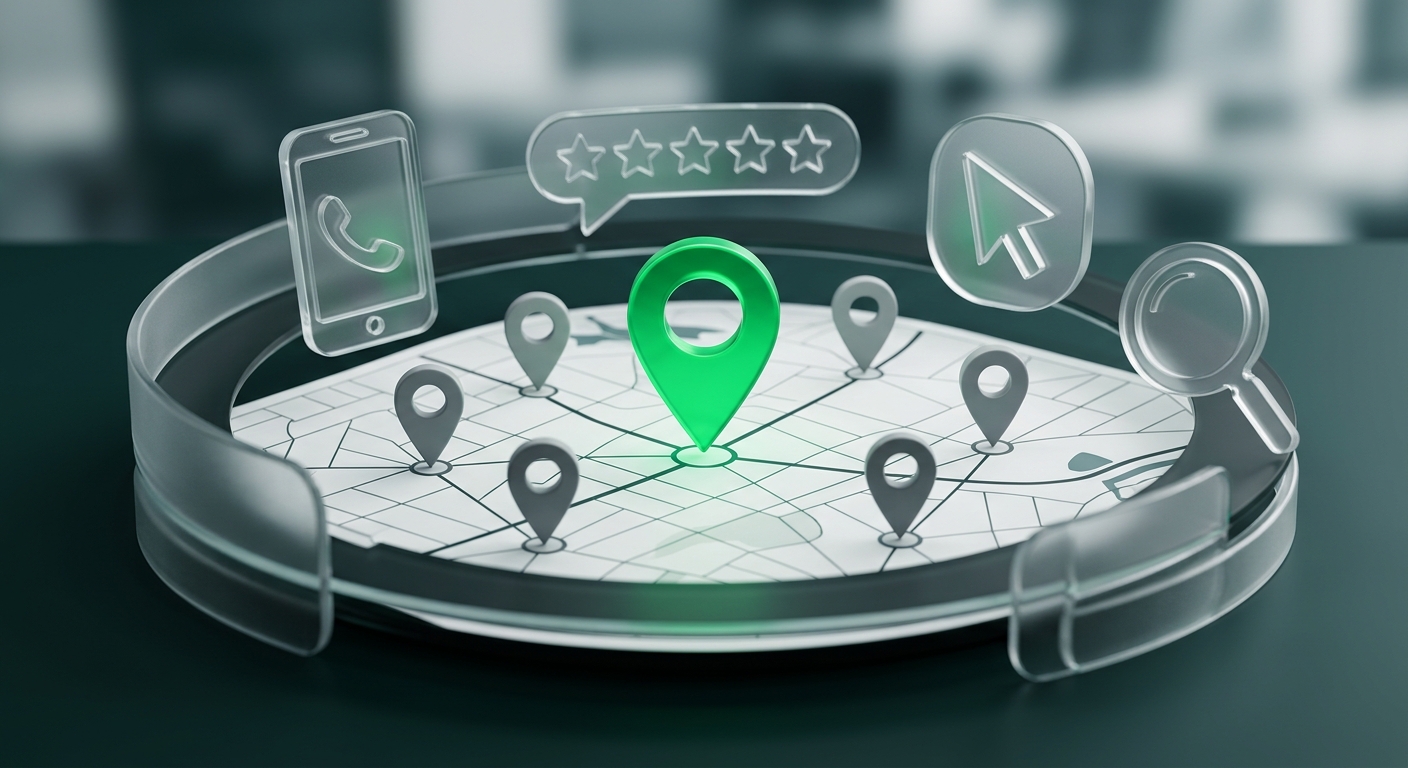
Did they click on your photos? Did they call your number? Did they ask for directions? Did they visit your website?
Every one of those actions tells Google: this business is relevant and worth showing to the next person who searches nearby. The more those interactions happen, the more Google rewards your listing with better visibility.
This is a big shift. It means ranking on Google Maps isn't just about optimizing your profile once and forgetting it — it's about consistently giving customers a reason to interact with your listing.
The 5 Factors That Actually Drive Rankings in 2026
1. Behavioral interactions with your listing
Calls, direction requests, website clicks, and photo views now rank among the strongest local ranking signals. Businesses with higher interaction rates — even in less competitive markets — consistently outrank older, less-engaged listings.
Practical fix: Make sure your phone number is correct and clickable. Add fresh photos regularly (at least 2 per month). Keep your hours accurate so customers don't arrive when you're closed — a wasted visit hurts your signals.
2. Review volume and recency
Reviews give a 15–20% ranking boost — but recency matters as much as volume. A business with 200 reviews, all from 2 years ago, can be outranked by a competitor with 40 recent reviews from the last 6 months.
Practical fix: Ask every satisfied customer to leave a review. The best time to ask is right after the service or purchase, when the experience is fresh.
3. Google Business Profile completeness
Google is 70% more likely to show a business with a complete profile. Yet most small business profiles are missing at least 2–3 key elements: business description, product/service photos, or Q&A responses.
Practical fix: Fill out every section of your profile. Write a business description that includes what you do, where you do it, and who you serve — naturally, without keyword stuffing.
4. NAP consistency (Name, Address, Phone)
Google cross-references your business information across the web. If your address appears differently on Yelp, your website, and your Google listing, it creates confusion — and Google penalizes inconsistency with lower rankings.
Practical fix: Search your business name and check the top 10 results. Anywhere your address or phone number appears incorrectly, update it.
5. Proximity + category relevance
Google prioritizes businesses within 1–5km of the searcher. You can't control proximity — but you can control your primary category. Choosing the most specific, accurate category for your business is one of the most underrated ranking moves available.
Practical fix: Go to your Google Business Profile and check your primary category. If you're a "restaurant," can you be more specific? "Italian restaurant" or "pizza restaurant" all attract different search queries.
What Most Small Business Owners Get Wrong
The most common mistake isn't a technical error. It's treating Google Business Profile as a one-time setup instead of an ongoing channel. The businesses in the top 3 are there because they consistently do the basics:
- Fresh photos regularly
- Responding to every review
- Posting updates about hours or promotions
- Keeping information accurate
How to Tell If Your Listing Is Working
Open Google Maps and search for your category (ex: "dentist in [your city]"). Does your listing appear in the top 3? If not, identify which of the 5 factors above is your weakest link.
Leapfy helps local businesses improve their Google Maps visibility step by step — without needing to understand SEO or hire an expensive agency.
Try it free and see where your listing stands today. Get started →