Google Maps for Auto Repair Shops: How to Get More Cars in Your Bay
In this article
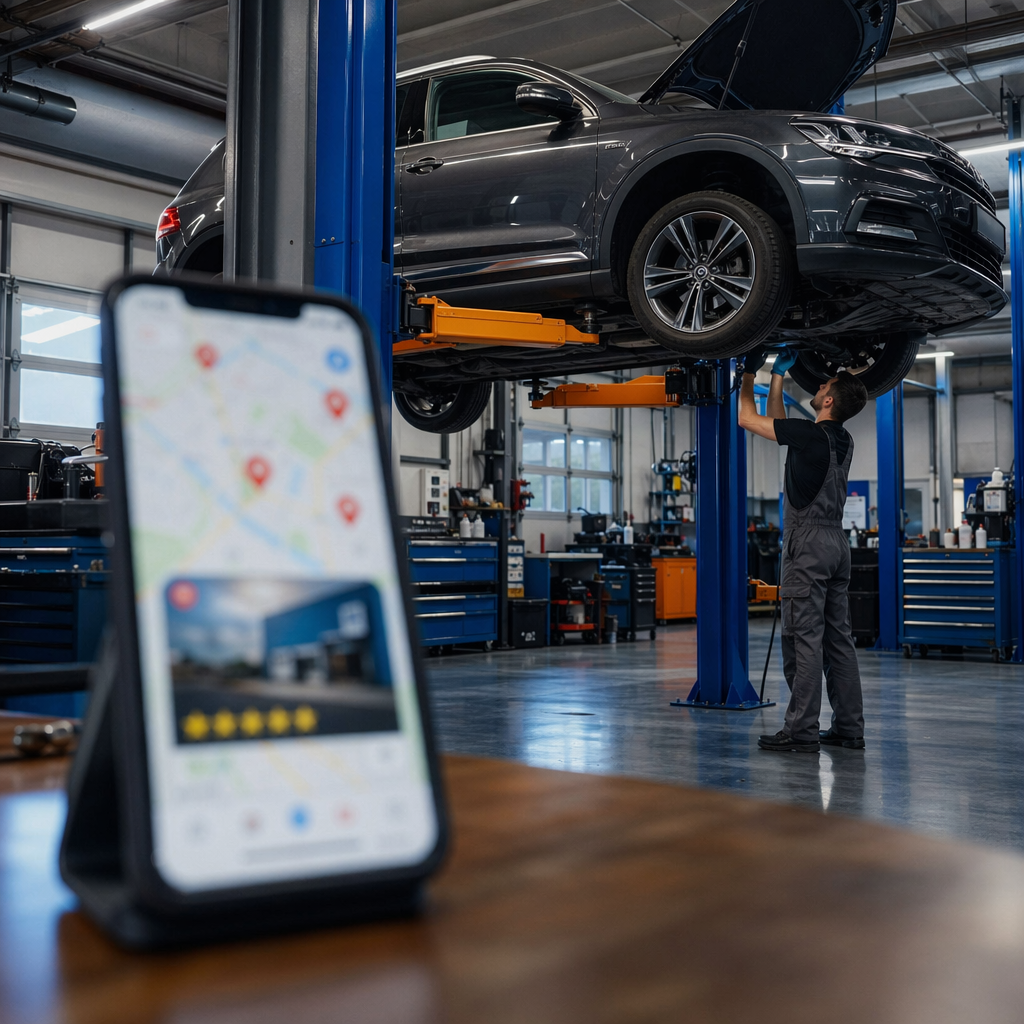
A car breaks down two miles from your shop. The driver pulls over, stress levels rising, and opens Google Maps. They search "auto repair near me." Three shops pop up. They look at the ratings, skim a couple of reviews, and call the first one that looks trustworthy.
Are they calling you?
If you own an auto repair shop, you already know that most of your business comes from people who need you, not people who are idly browsing options. They have a broken car, a warning light, a noise that's getting worse, an inspection due, or a routine maintenance appointment they've been putting off. When they search, they're ready to schedule.
The shop that shows up at the top of Google Maps in those moments gets the call. The rest get nothing.
This guide walks you through exactly how to make sure your shop is the one that shows up, and shows up looking great.
Why Your Competitors Are Getting Calls You Should Be Getting
Here's the uncomfortable reality: some of the shops outranking you on Google Maps aren't necessarily better than you. They've just done a better job of showing up online.
You might have a better reputation in person, more experienced technicians, better equipment, and fairer prices. But if your Google presence is thin, incomplete profile, few reviews, no recent activity, you're invisible to anyone who doesn't already know you.
An estimated 97% of consumers search online to find local businesses (based on typical consumer behavior studies). For auto repair, where trust and proximity are both critical, Google Maps is the primary discovery tool. People search, they see a short list of shops, they make a quick decision.
The gap between first place and fourth place on Google Maps is massive. Most clicks and calls go to the top two or three listings. Everything below that gets dramatically less attention.
The good news? Most independent auto repair shops are not doing this well. There's real opportunity here, and it doesn't require an expensive marketing agency or a big ad budget.
Setting Up Your Google Business Profile the Right Way
Your Google Business Profile is the foundation. Let's go through the key elements.
Primary category: "Auto Repair Shop" is the most common, but if you specialize, consider whether something more specific fits better: "Brake Shop," "Tire Shop," "Transmission Shop," "Oil Change Service," "Auto Electrical Service." You can use your primary category and add secondary ones that reflect your full range of services.
Services list: This is gold for auto repair shops. List every service you offer, oil changes, brake service, tire rotation, wheel alignment, transmission repair, engine diagnostics, AC service, battery replacement, state inspections, pre-purchase inspections, fleet maintenance. Include a short description for each.
This serves two purposes: it tells Google what searches to connect you to, and it tells customers what they can come to you for. A customer who sees "pre-purchase inspection" listed might realize they should bring in that used car they're considering before signing the papers. A customer who sees "AC service" listed in June is reminded they've been sweating in their car for weeks.
Business description: Write it like you're talking to a nervous driver who's never been to your shop before. Mention your years in business, your certifications (ASE certified technicians? Note it prominently), your service area, what makes you different from the chain shops, and your commitment to honest, transparent service. Trust is the biggest purchasing factor in auto repair, address it directly.
Hours: Keep these accurate. If you're closed Sundays but someone calls expecting you to be open, that's a lost job and a potential bad review. Update holiday hours too.
Photos: Show your shop. A clean, organized workspace signals professionalism and competence. Show your equipment, your bays, your team, and ideally some before/after repair photos. A rusty brake rotor next to a shiny new one is simple and compelling.
The Trust Problem in Auto Repair, and How Reviews Solve It
Let's be honest about something: people are nervous about auto repair shops. They worry about being upsold, overcharged, or told they need repairs they don't actually need. This anxiety is real, and it directly affects who they choose when they search Google Maps.
Your reviews are the antidote to that anxiety.
When a potential customer sees 150 reviews with comments like "honest shop, didn't try to upsell me," "they explained everything clearly," "fair prices and did it right the first time", that fear melts away. They feel confident calling you. They trust you before they've even walked through the door.
Building a review strategy that actually works:
The end of a service appointment, when you hand back the keys and the customer is relieved and grateful, is your moment. "Really glad we got that sorted for you! If you have a second, a Google review helps us out a lot. Here's a card with a QR code."
Train every person on your front desk to ask consistently. It becomes a habit, and the reviews accumulate steadily.
You can also send a follow-up text or email the day after an appointment with a direct link. Keep the message short and genuine: "Thanks for trusting us with your car. If you have a moment, we'd love a Google review, it really helps our team."
On responding to reviews:
This one matters a lot in auto repair specifically. Respond to every review, thank happy customers and acknowledge concerns from unhappy ones. For negative reviews, never be defensive. Acknowledge the experience, express that it doesn't reflect your standards, and invite them to reach out. Potential customers reading your reviews will be watching how you handle dissatisfaction.
Making the Most of High-Intent Search Moments
People search for very specific auto repair needs. If you optimize for those specific searches, you can capture customers who are highly motivated to book right now.
Examples of specific searches your potential customers make:
- "brake repair near me"
- "check engine light [city]"
- "oil change near me open now"
- "car inspection [city]"
- "mechanic for European cars near me"
- "transmission repair [neighborhood]"
By listing these services explicitly, using them in your business description naturally, and writing posts about them regularly, you increase the chance that your shop shows up for these specific, high-intent searches.
Specialty is especially powerful here. If you're one of the few shops in your area that works on European vehicles, or specializes in diesel engines, or is certified for hybrid repair, make that prominent. You'll own a search niche that few competitors can compete in.
Q&A Posts: Answer Before They Call
Google Business Profile has a Q&A feature where anyone can ask a question on your profile, and you can answer. More importantly, you can add questions and answer them yourself.
Think about the questions your customers ask before deciding to bring their car in:
- "Do you offer free estimates?"
- "Do you work on [specific make]?"
- "How long does an oil change typically take?"
- "Can I drop my car off before you open?"
- "Do you offer any warranty on repairs?"
Answer these proactively in the Q&A section of your profile. This both builds trust and helps your profile appear in more conversational searches.
Consistency Across Directories: The Detail That Matters
Your shop's name, address, and phone number should be identical everywhere it appears online: Google, Yelp, YellowPages, RepairPal, CarFax Service, Facebook, your website.
Even small variations, "Auto Repair" vs. "Auto Repair Shop," "Ave" vs. "Avenue," a phone number that changed when you upgraded your business line, can cause confusion and hurt your Maps ranking.
Set aside time to audit your listings across the web. Search your business name and work through every result. Claim any unclaimed listings, correct inconsistencies, and make sure everything matches Google exactly.
Seasonal and Promotional Posts: Give People a Reason to Come In Now
Auto repair shops have natural seasonal content opportunities that most don't take advantage of:
- Winter prep: "Is your battery ready for cold weather? Come in for a free battery check this month."
- Spring: "Time for new wiper blades and a tire rotation after a long winter."
- Summer: "Beat the heat, get your AC system checked before summer hits."
- Back to school: "Sending a student back to college with an old car? Pre-trip inspection special available."
- Holiday travel: "Planning a road trip? We'll make sure you get there safely."
Seasonal posts in your Google Business Profile keep your listing active, connect with customers who are already thinking about their car, and give people a reason to come in outside of emergencies.
How Leapfy Can Help Your Auto Repair Shop
Running a busy shop means your days are full, diagnostics, repairs, customer calls, parts orders, and managing a team. Spending hours every week on your Google presence isn't realistic.
Leapfy is a Google Maps SEO tool designed for local businesses like yours. It helps your shop stay visible, active, and competitive on Google without the time investment of doing it all manually. More cars in your bays, less time at the keyboard.
Try Leapfy free at leapfy.ai →
Frequently Asked Questions
Q: How does Google decide which auto repair shops show up at the top of Maps?
A: Google looks at several factors: how complete and accurate your profile is, your proximity to the person searching, your reviews (quantity, rating, and recency), how active your profile is, and how consistently your business information appears across the web. The more of these you have working in your favor, the higher you rank.
Q: I've been in business for 20 years. Why is a newer shop outranking me?
A: Longevity matters for reputation, but Google Maps cares about your current online presence. If a newer shop has a more complete profile, more recent reviews, and an active posting strategy, it will outrank an older shop with a neglected profile. The fix is exactly what this guide covers, there's nothing to stop you from leaping ahead of them.
Q: Should I create a separate listing for each of my shop locations?
A: Yes, each physical location should have its own Google Business Profile. That way each location can rank in its own local area. Make sure the listings are clearly differentiated by address and phone number.
Q: Does responding to negative reviews actually help?
A: Yes, both for ranking and for conversion. Responding to reviews (positive and negative) signals to Google that you're an engaged business. For potential customers, seeing a thoughtful, professional response to a complaint actually builds trust rather than undermining it.
Q: Is Google Maps better than paying for leads through HomeAdvisor or Angi?
A: Once you've established your Google Maps ranking, the leads that come in from it are essentially free, no cost per lead, no monthly service fee. It takes consistent effort to build, but the ROI over time tends to be significantly better than pay-per-lead platforms for most auto repair shops.
Ready to fill your bays with more customers through Google Maps? Try Leapfy free →
*Part of the "Google Maps for Local Businesses" series. Also read: Google Maps for Plumbers | How to Get Your Restaurant to the Top of Google Maps