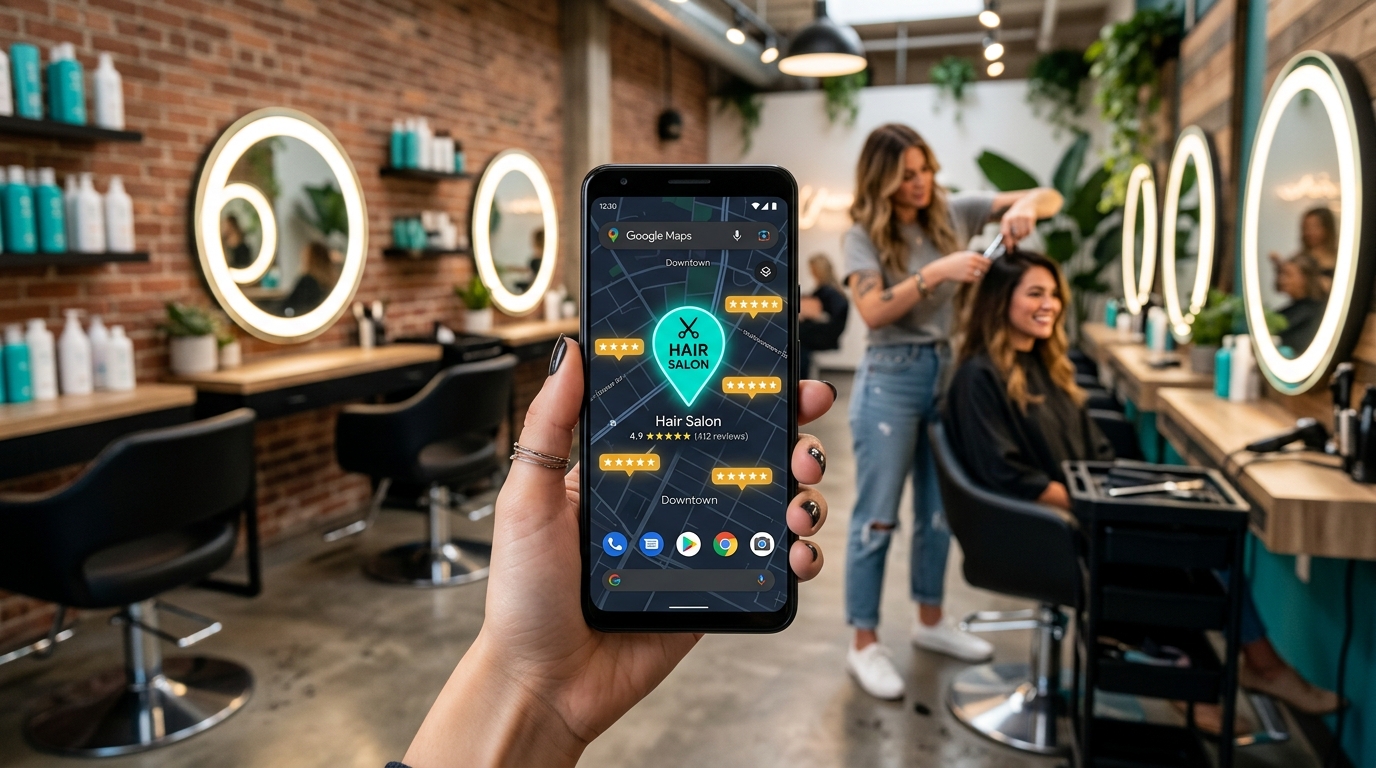
Understanding the Google Maps Engagement Loophole for Local Business Growth
In this article
Understanding the Google Maps Engagement Loophole for Local Business Growth
In 2026, local search visibility is determined primarily by how users interact with a business profile rather than just static information. The Google Maps Engagement Loophole is a strategic approach that focuses on maximizing specific user signals—such as clicks for directions, direct messaging, and high-frequency reviews—to demonstrate relevance to search algorithms. When a business profile shows consistent and rapid interaction, the algorithm prioritizes that listing in local search results, creating a cycle of increased visibility and further engagement.
The Google Maps Engagement Loophole functions by exploiting the algorithm's preference for "live" data. Instead of relying solely on keywords, the system tracks how often users choose a specific business over its competitors. This means that a business with lower total reviews but higher recent interaction rates can often outrank established competitors. Understanding the Google Maps Engagement Loophole allows small and medium-sized enterprises to compete effectively by focusing on activity metrics that prove the business is currently popular and helpful to users.
How the Google Maps Engagement Loophole Influences Local Rankings
The core mechanism behind the Google Maps Engagement Loophole is the feedback loop between user intent and profile response. When a user searches for a service and interacts with a profile, the search engine records this as a successful match. By consistently generating these matches, a business can trigger the Google Maps Engagement Loophole, which signals to the search engine that the business is the most relevant choice for that specific geographic area.
Key interaction signals that drive the Google Maps Engagement Loophole include:
- Click-Through Rate (CTR): The frequency at which users click on a listing after seeing it in search results.
- Direction Requests: Users asking for navigation to the business location, which confirms physical intent.
- Direct Messaging: Rapid responses to customer inquiries through the profile’s chat feature.
- Stay Time: How long a user spends looking at photos, reading updates, or checking menus on the profile.
By optimizing these specific touchpoints, businesses can maintain a dominant position in the "Map Pack." The Google Maps Engagement Loophole is not about tricking the system but about providing the high-quality, interactive experience that the algorithm is designed to reward.
Implementing the Google Maps Engagement Loophole Through Automation
Managing the volume of interactions required to sustain the Google Maps Engagement Loophole can be labor-intensive for small teams. This is where AI-driven platforms like Leapfy become essential. To effectively utilize the Google Maps Engagement Loophole, a business must respond to every inquiry and review almost instantly. Automation ensures that no customer signal is ignored, keeping the engagement score high at all times.
Using Leapfy, businesses can automate the following processes to support the Google Maps Engagement Loophole:
- Instant Lead Response: Automatically replying to messages sent via the business profile to maintain high responsiveness scores.
- Review Management: Promptly acknowledging new reviews, which encourages more users to leave feedback and strengthens the Google Maps Engagement Loophole.
- Content Updates: Scheduling regular posts and photo updates to keep the profile active and engaging for visitors.
- Data Analysis: Monitoring which types of interactions lead to the highest conversion rates to refine the engagement strategy.
Consistent activity is the fuel for the Google Maps Engagement Loophole. When a profile remains stagnant, its ranking typically drops. By using intelligent automation, a company ensures that its digital presence remains active 24/7, satisfying the algorithmic requirements of the Google Maps Engagement Loophole without requiring constant manual oversight.
Technical Benefits of the Google Maps Engagement Loophole in 2026
The primary benefit of mastering the Google Maps Engagement Loophole is the reduction in customer acquisition costs. Traditional advertising requires continuous spending to maintain visibility, whereas the Google Maps Engagement Loophole relies on organic interaction signals that build cumulative value over time. As the profile gains more authority through these interactions, it requires less effort to maintain its top-tier ranking.
| Feature | Impact on Ranking | Role in Engagement Loophole |
|---|---|---|
| Response Speed | High | Maintains the Google Maps Engagement Loophole by showing reliability. |
| Photo Views | Medium | Increases stay time and user interest. |
| Call-to-Action Clicks | High | Directly signals user conversion and profile utility. |
| Frequency of Updates | Medium | Keeps the profile fresh for both users and crawlers. |
Furthermore, the Google Maps Engagement Loophole helps in capturing "near me" search traffic, which has the highest intent in the local market. Users searching for immediate solutions are more likely to click on the first few results that show high engagement and positive recent activity. By aligning business operations with the Google Maps Engagement Loophole, companies ensure they are visible at the exact moment a potential customer is ready to make a purchase.
Maximizing Long-Term Results with the Google Maps Engagement Loophole
To sustain the advantages of the Google Maps Engagement Loophole, businesses must move beyond basic profile setup and focus on a long-term engagement strategy. This involves a shift from passive management to active interaction. Every photo uploaded, every question answered, and every review managed contributes to the strength of the Google Maps Engagement Loophole for that specific business entity.
The integration of AI tools like Leapfy allows for the scaling of these interactions. As a business grows, the number of inquiries increases, making it harder to maintain the manual speed required by the Google Maps Engagement Loophole. Automation handles the repetitive tasks of lead capture and follow-up, allowing the business owner to focus on service delivery while the AI maintains the Google Maps Engagement Loophole.
In conclusion, the Google Maps Engagement Loophole represents the modern standard for local SEO. It prioritizes actual human interaction over technical keyword stuffing. By understanding and implementing the Google Maps Engagement Loophole, and supporting those efforts with robust automation from Leapfy, local businesses can secure a significant competitive advantage in the 2026 digital landscape. Successful implementation leads to higher visibility, more foot traffic, and a stronger connection with the local community.